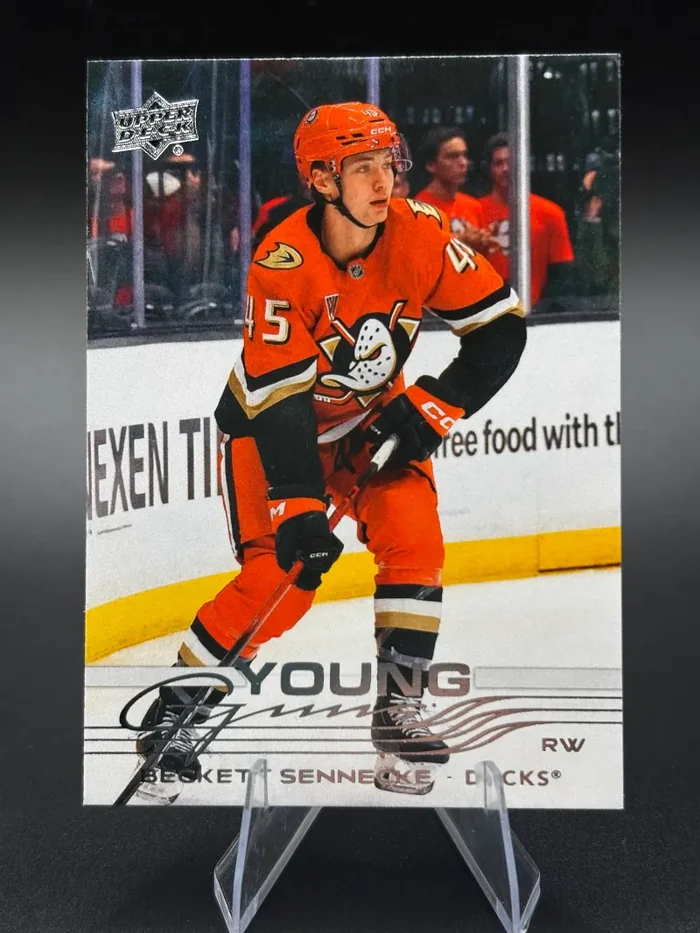
Can You Judge a Raw Card From eBay Photos? What I Look For as a Seller
What eBay listing photos can and can't tell you about a raw card's condition, from a seller who shoots his own listings, plus the photos worth asking for.
The listing says “sharp corners, pack fresh, gem potential.” There are three photos, and the price is well under what PSA 10s of the same card are selling for. Before you hit Buy It Now, the question is how much those three photos can prove.
I sell cards on eBay through Hub City Collectibles, so I see this from both sides. I shoot my own listings, and I’ve bought raw cards off other people’s photos, including two that came back from CGC as a 10 and a 9.5.
What Can You Tell From a Listing Photo?
Less than the title suggests, but more than nothing. A good straight-on photo tells you a lot about centering and anything obvious on the corners and edges: a ding, a soft tip, white showing through on a dark border.
Surface is a different story. Scratches, print lines and small dents show up when light hits the card at an angle, and most listing photos are shot straight on. So a photo can rule a card out. It can’t rule a 10 in.
What Photos Should a Good Raw Listing Include?
At minimum, the front and back, shot straight on, with the whole card in frame. Better listings add close-ups of the corners and one angled shot under a light so you can see the surface.
For what it’s worth, here’s how I shoot mine: iPhone 16 at 2x zoom, inside a small light box with a dark background, card standing in a clear acrylic stand. A dark backdrop makes white edge wear stand out instead of blending into a white tabletop, and shooting a little farther back with zoom tends to keep a card’s edges straighter than holding the phone close at wide angle.
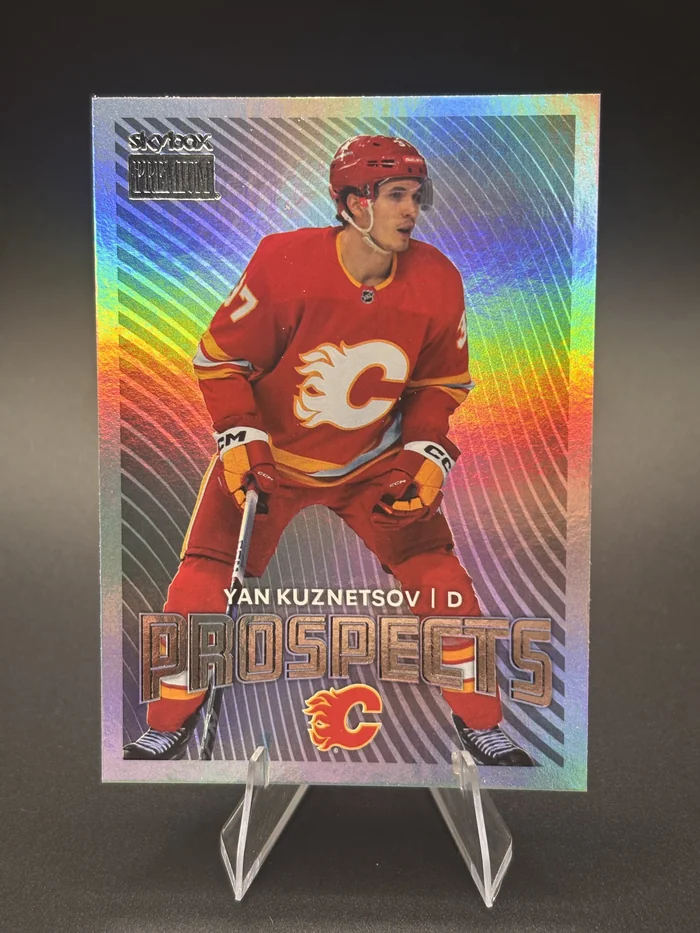
Yan Kuznetsov, front
2024-25 Skybox Metal Universe Prospects #PP-48. Foil throws rainbow reflections straight on, which is why an angled shot matters.
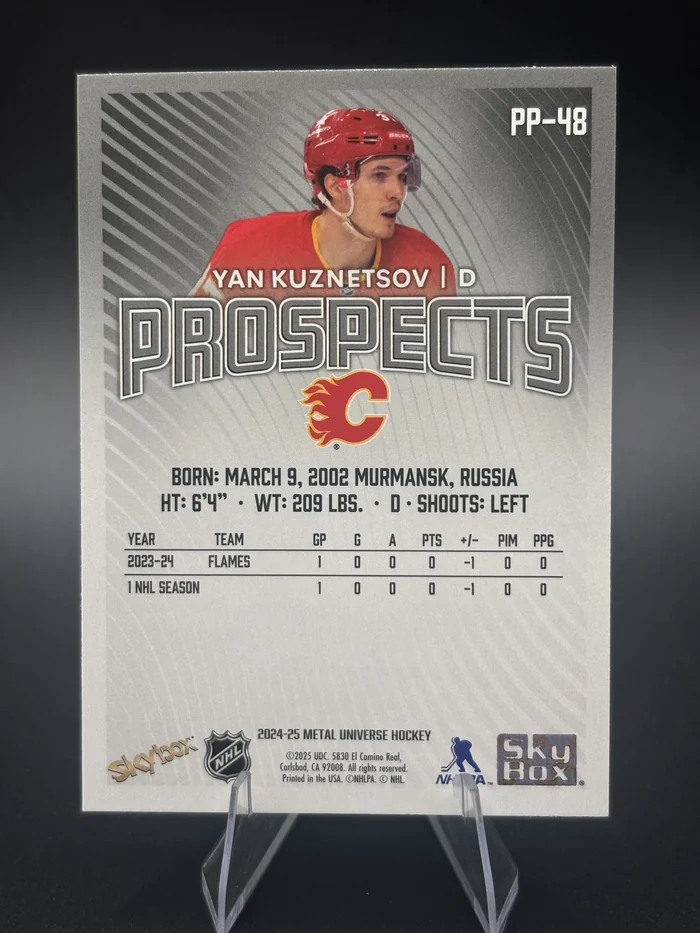
Yan Kuznetsov, back
The back gets its own straight-on shot, since it has its own centering.
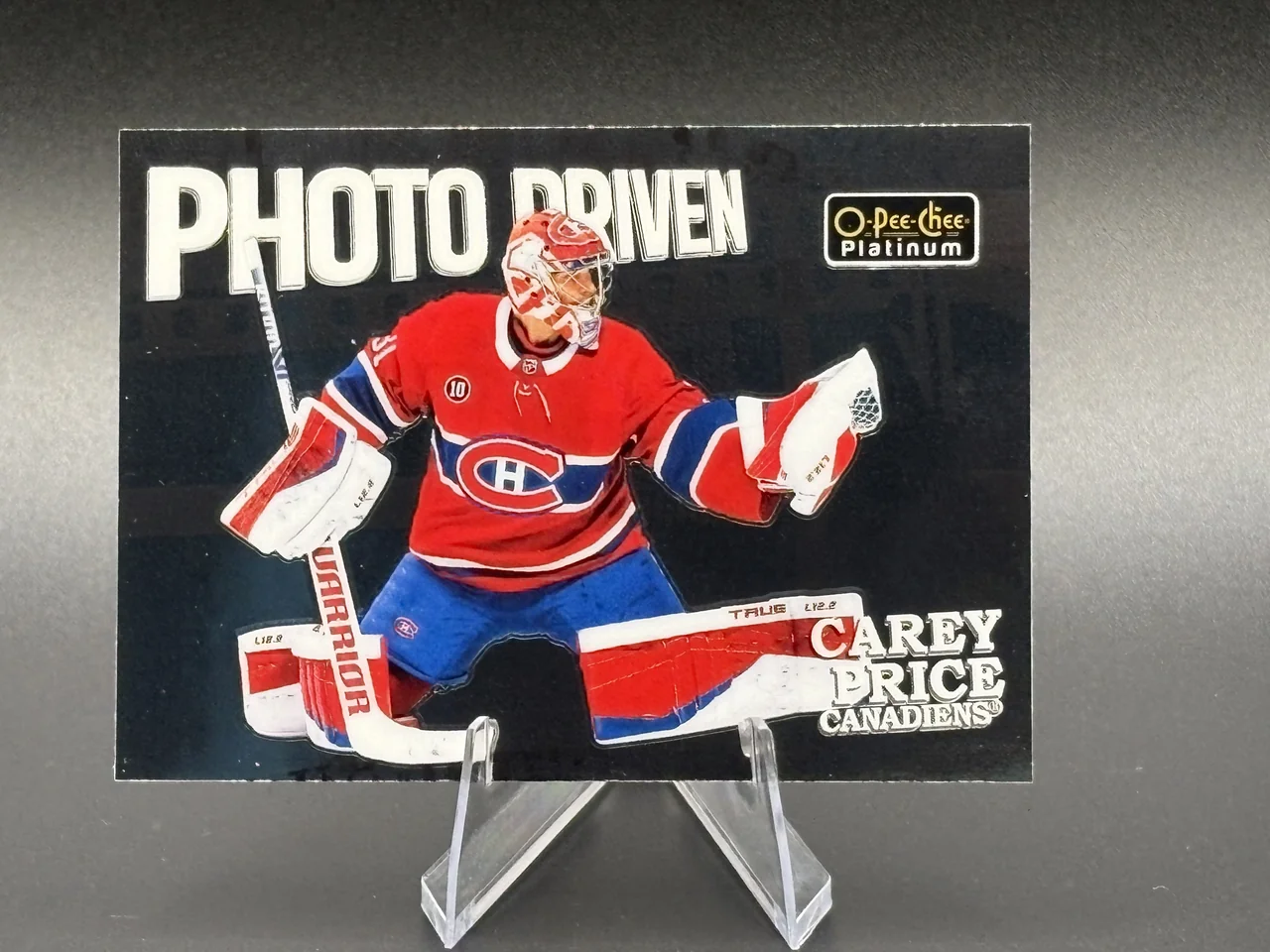
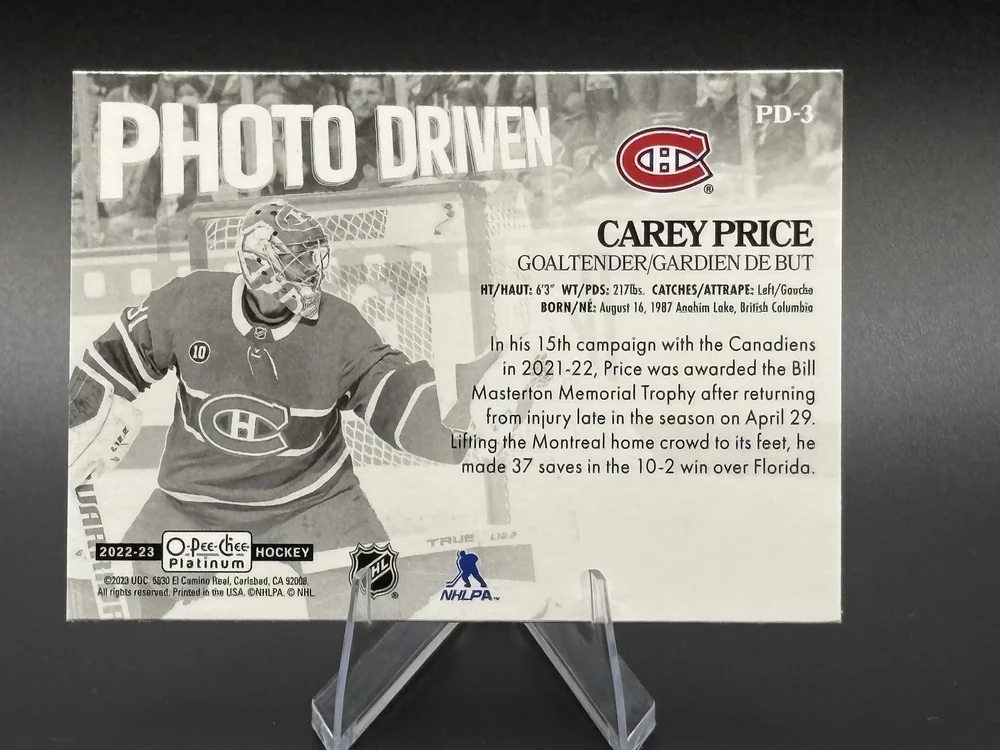
The stand has a blind spot, and since plenty of sellers use one, it’s worth knowing. It hides a stretch of the bottom edge, and you can see it in the back of this Carey Price card from our store, where the stand’s arms sit in front of the lower border. The raw cards on this site that stand in a clear stand against a dark background are the same photos I use in my eBay listings. If a listing only shows the card in a stand, ask for a flat shot of the bottom edge.
How Do You Check Centering From a Seller’s Photo?
Only from a straight-on shot. Compare the border on the left to the right, then top to bottom. For a PSA 10, the front needs to be roughly 55/45 or better, and our PSA 10 requirements breakdown goes deeper on that. A photo taken at even a slight angle makes one side look wider than it is, so if the card looks tilted, don’t trust the borders.
Look at the back too. Plenty of sellers skip the back photo, and the back has its own centering standard.
Which Listings Are Worth Skipping?
I’d start with photo count. A single photo of a raw card worth real money is one I’d pass on unless the seller will send more. After that comes glare. A card shot inside a top loader or penny sleeve under bright light can hide a lot, because the plastic reflects right over the surface you need to see. Tight crops are next, the kind where the card fills the frame and you can’t tell whether the corner tips are all there.
Title language is the last thing I weigh, but I do weigh it. A raw listing that says “PSA 10 ready” or “gem” is telling you what the seller hopes, not what a grader decided.
Trimming is very hard to spot from photos, so I wouldn’t try to diagnose it from a listing.
Should You Ask the Seller for More Photos?
Yes, and a good seller won’t mind. Ask for all four corners up close, a flat shot of any edge a stand or sleeve was covering, and one photo with the light coming from the side so the surface shows. A quick, complete reply is a good sign. A seller who won’t send them has answered the question too.
Can a Pre-Grader Read a Seller’s Photos?
It can, with limits. Before I bought my Matthew Schaefer and Macklin Celebrini Young Guns, I ran each seller’s listing photos through CrackorKeep. Both came back an estimated 9, with a 9 in every subgrade. When the cards arrived I photographed them myself and ran them again, and the read held at a 9. I sent both to CGC, and they came back a 10 and a 9.5.
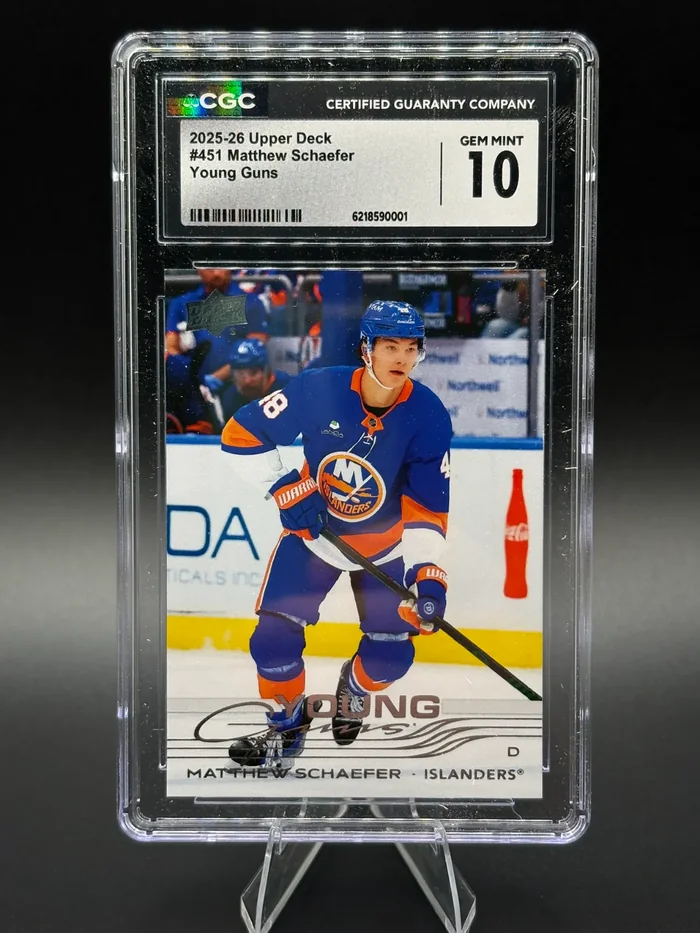
Matthew Schaefer Young Guns
Estimated 9 from the seller's listing photos before I bought it, and again from my own photos once it arrived.
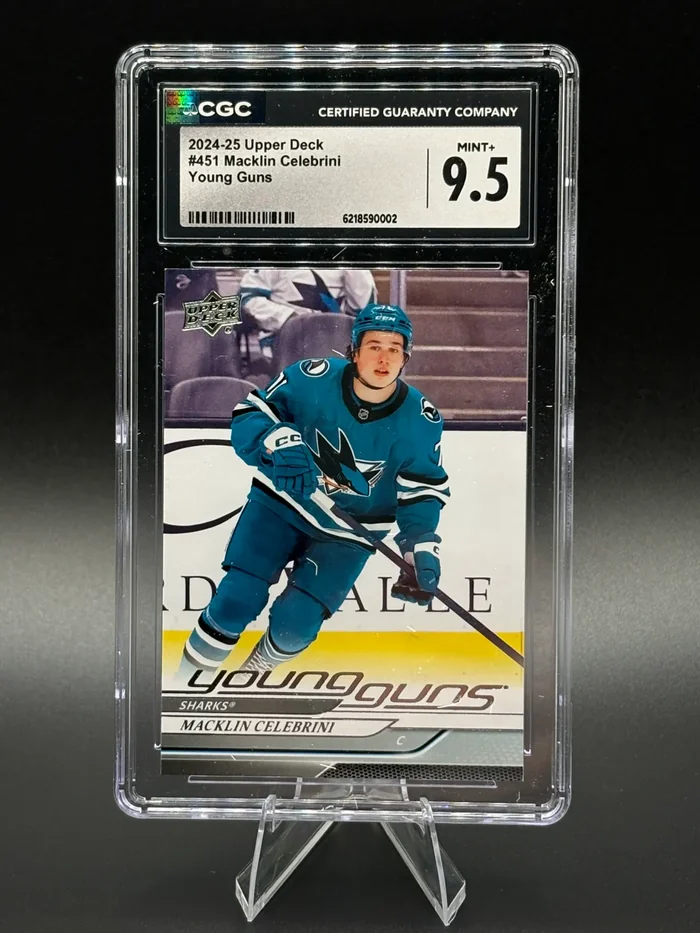
Macklin Celebrini Young Guns
Same process: seller's photos, then my own photos in hand, then CGC.
Two cards don’t prove anything, and the tool was conservative on both. What it did was confirm the photos showed clean, well-centered cards with nothing obviously wrong, which was enough for me at those prices. It won’t confirm a 10 from listing photos, and a compressed eBay image is often worse input than photos you take yourself. The CGC results post has the full comparison.
If there’s a listing you’re watching, save the seller’s photos and run them through CrackorKeep . It takes about 30 seconds.
What Protects You If the Card Isn’t As Pictured?
For raw cards priced at $200 or more, eBay’s Authenticity Guarantee. As of October 2026, eligible raw and graded singles at that price ship to PSA first, and PSA checks that the card is authentic and matches the listing before it goes to you. Cards aren’t graded as part of that check.
Below $200, you’re relying on eBay’s standard Money Back Guarantee if a card shows up materially different from the listing. Check eBay’s current terms before counting on either one, since both have changed more than once.
The Bottom Line
Pay for the grade the photos prove, not the grade the title promises. If the listing shows the front, the back and a clear look at the edges, and the price still works at a 9, you’re in a good spot. If only a 10 makes the money work and the photos can’t show you the surface, that’s a bet, and it’s worth running the numbers first. Our guide on whether grading is worth it walks through how.
Frequently Asked Questions
What does “raw” mean on eBay? A raw card is one that hasn’t been graded and sealed in a slab by a company like PSA, CGC, BGS or SGC.
Can a seller hide damage in photos? Not always on purpose, but straight-on shots and plastic sleeves both hide surface wear, and card stands can cover the bottom edge. Ask for the angles you’re missing.
Does eBay’s Authenticity Guarantee grade the card? No. For eligible singles priced at $200 or more, PSA checks that the card is authentic and matches the listing, but it doesn’t assign a grade.
Is it worth buying raw cards to grade? Sometimes. If the card still makes sense at a 9, the risk is manageable; if only a 10 pays off, you’re betting on details the listing photos probably can’t show.
Grade Your Card Before You Pay PSA
Upload your card photos and get an instant AI estimate across centering, corners, edges, and surface. No account. No credit card. Just an honest grade.
Check This Raw Card →