CrackorKeep Was Too Conservative on My First CGC Submission — Here's What Came Back
I sent three Young Guns rookies to CGC and recorded CrackorKeep's prediction before I knew the results. Two came back Gem Mint 10s. Here's the real, unedited comparison — and what it taught me about the tool.
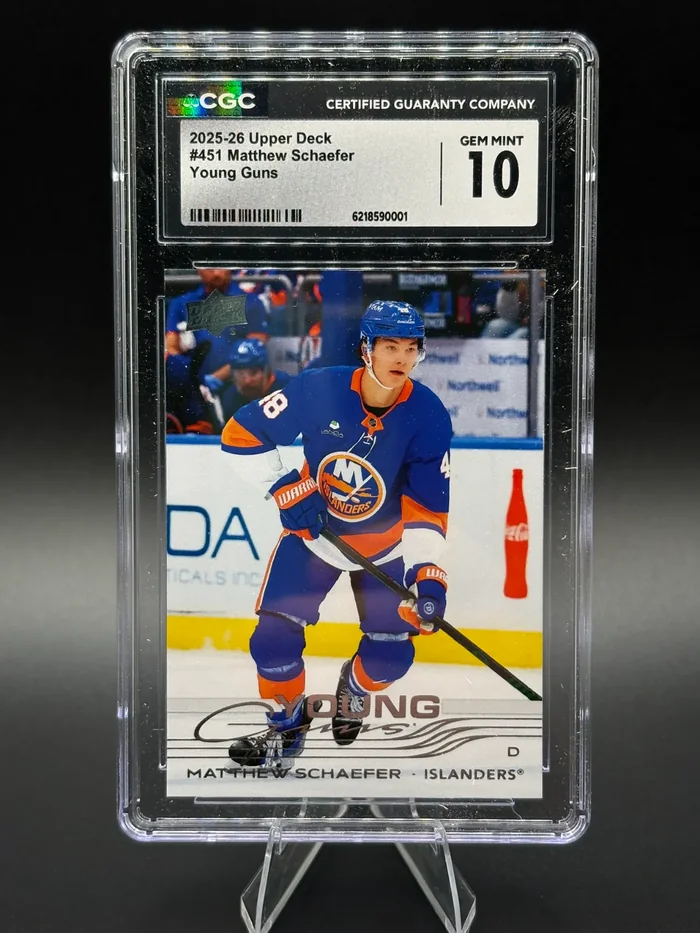
Two of my three cards came back Gem Mint 10. CrackorKeep, the tool I built, said all three were most likely a 9.
This is the exact prediction CrackorKeep gave me before I shipped these cards to CGC, and I’m not going back to edit it now that I know the answer. That’s the whole point of publishing it.
What I Sent In
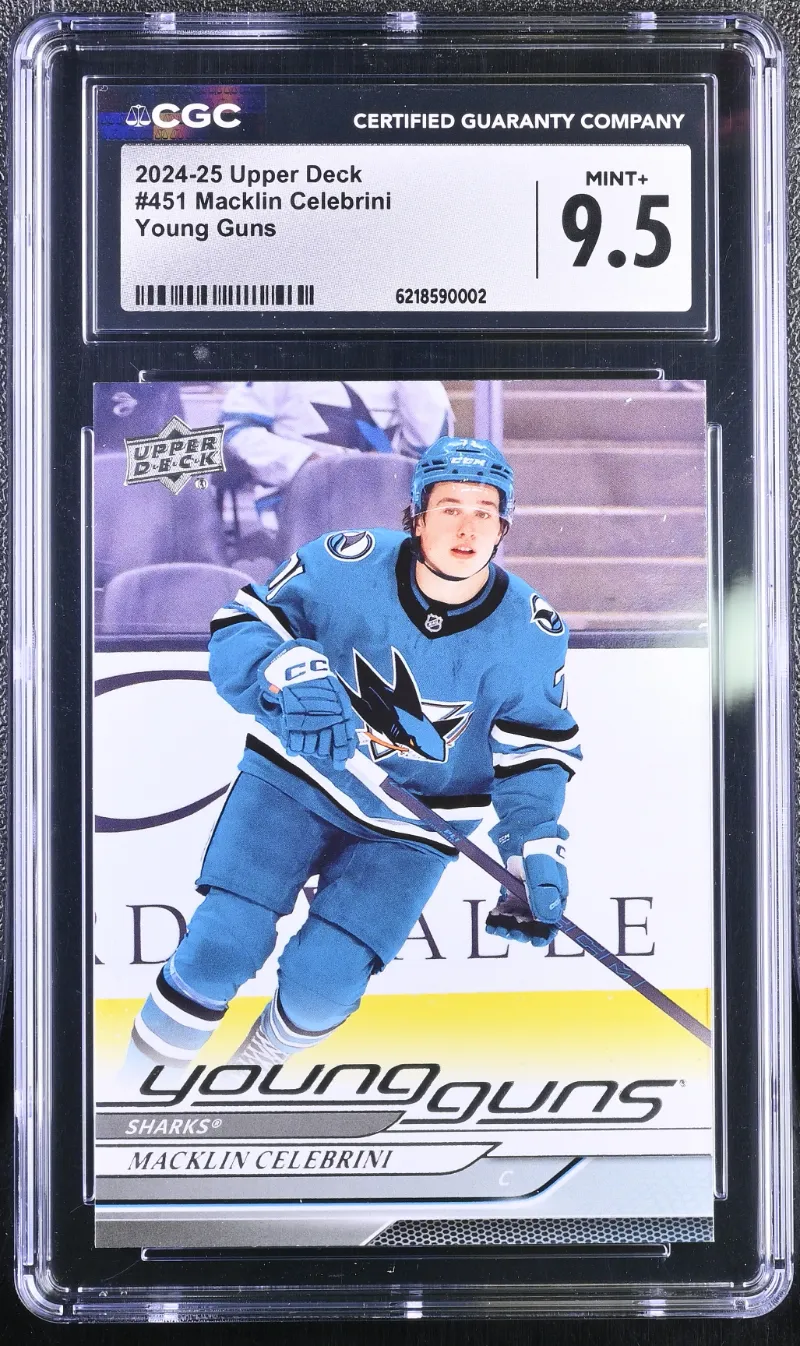
Three Young Guns rookies went out to CGC on the Standard tier — Matthew Schaefer, Michael Misa, and Macklin Celebrini. I ran each one through CrackorKeep first, the same way I tell everyone else to.
All three came back with the exact same read: an estimated grade of 9, subgrades of 9 across centering, corners, edges, and surface, and a probability spread of 20% for a 10, 50% for a 9, 25% for an 8, and 5% for a 7.
That similarity bothered me before I even had the results. Three physically different cards, three different photo sets, landing on an identical output down to the percentage point — that’s not what I’d expect from a tool actually reading each card individually. I flagged it, and it turned out to matter. More on that below.
What Came Back
- Schaefer: CGC 10
- Misa: CGC 10
- Celebrini: CGC 9.5
Matthew Schaefer
Gem Mint — CrackorKeep had this at 9, 20% probability of a 10.
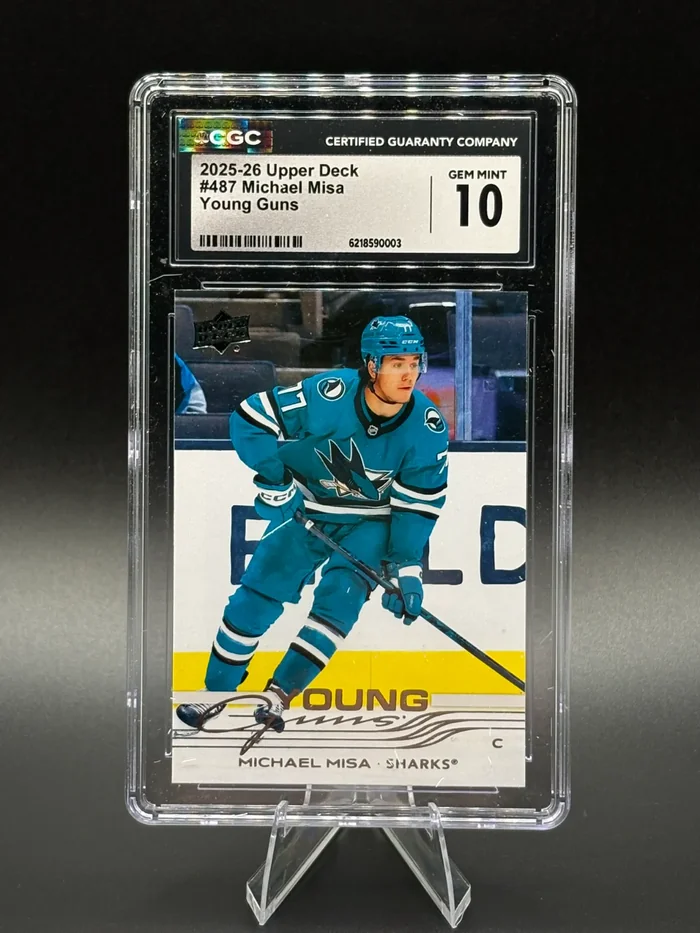
Michael Misa
Gem Mint — same 9, same 20%, same everything as the other two.
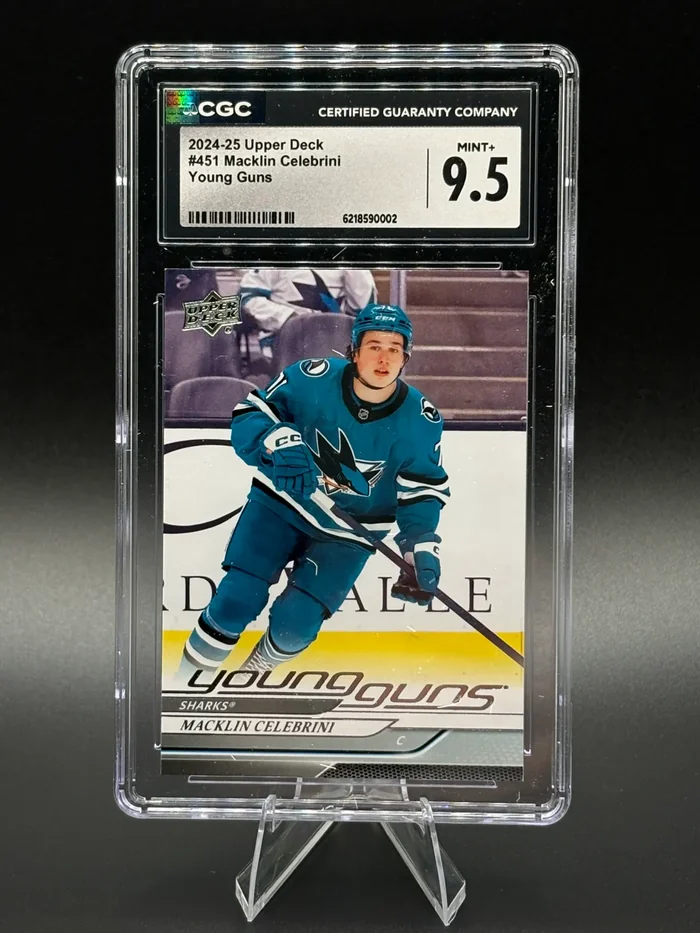
Macklin Celebrini
Landed in the gap between a 9 and a 10 — a grade CrackorKeep's whole-number scale can't display.
Two Gem Mints and a card that landed in the gap between a 9 and a 10 — a distinction CrackorKeep’s whole-number scale can’t even express.
The Range Was Right. The Probabilities Were Too Conservative.
Here’s the honest scorecard:
- Exact grade match: 0 of 3
- Within one full grade: 3 of 3 (100%)
- Inside the stated 8-10 range: 3 of 3 (100%)
- Average miss: 0.83 grades
- Direction of every miss: conservative — CrackorKeep never overshot, it only underestimated
That’s a specific, meaningful pattern, not a random scatter. CrackorKeep correctly identified all three as strong, clean cards — every official grade landed exactly where the tool said it might. What it didn’t do well was weight how likely the top of that range actually was. A card that’s genuinely a coin-flip between a 9 and a 10 shouldn’t get the same 20% probability as a card with real, visible reasons for hesitation. On this batch, it did.
Why I Didn’t Just Fix It and Move On
The identical output across all three cards was too specific to ignore, so I asked Codex to check whether it showed up elsewhere. It pulled 17 days of real production data — every scan CrackorKeep had run, over 170 of them — and found something worth taking seriously: not one of them, across any card, had ever come back as an estimated grade of 10. Not once.
That sent us into an actual investigation — the kind with real production data, known-outcome test cards, and a fix that got proposed, tested, and rejected before it ever reached production. The short version: the tool had a built-in ceiling that made a displayed 10 almost impossible to reach, no matter how clean a card actually looked in the photos.
We found a real, narrow fix for part of it — it’s live now, and it moved these same three cards’ confidence in a 10 up from 20% to roughly 25-28%. We also built something that looked like a much bigger fix, tested it carefully, and caught it doing something worse: it started treating a real, confirmed CGC 9 exactly the same as the two real 10s. We threw that version out rather than ship something that just moved the problem around.
The honest conclusion, after all of it: some of this isn’t a prompt problem at all. A photograph sometimes just doesn’t contain whatever specific detail is the actual difference between a 9 and a 10 — the kind of thing a grader only catches with a loupe and the physical card in hand. No amount of prompt engineering fixes a gap in what the photo itself can prove.
What This Actually Means If You’re Using CrackorKeep
Read a 20% chance of a 10 as a real, non-trivial shot — not a rounding error. This batch is three cards, which isn’t enough to prove exactly how much CrackorKeep is underweighting the top end, but it’s the first real data point in what I’m planning to make an ongoing, honest record. The range the tool gives you is doing real work. The single headline number is the part worth holding a little loosely.
I’ll keep logging results as more cards come back from CGC, PSA, and SGC — misses included, same as this one.
The Bottom Line
CrackorKeep put all three of these cards in the right neighborhood and undersold how good two of them actually were. That’s a real, specific, fixable-in-part limitation, not a reason to distrust the tool wholesale — and it’s exactly the kind of thing I built this whole project to find out, on my own cards, before telling anyone else about it.
Run your own card through CrackorKeep — and if you’ve got a graded result to compare it against, I’d genuinely like to hear how it did.
Grade Your Card Before You Pay PSA
Upload your card photos and get an instant AI estimate across centering, corners, edges, and surface. No account. No credit card. Just an honest grade.
Check This Raw Card →