Which Hockey Cards Are Actually Worth Grading? (2026 Guide)
Wondering if your hockey cards are worth grading? Here's when Young Guns, OPC Platinum, Future Watch Autos, The Cup, and vintage stars justify PSA, CGC, BGS, or SGC grading — as of August 2026.
Hockey collectors love grading Young Guns, but most Young Guns aren’t worth grading. That’s not because they’re bad cards. It’s because PSA 9s often sell too close to raw copies to recover grading costs. The cards that usually justify submission are the ones with a realistic path to a PSA 10 — or rare inserts where scarcity changes the math.
That’s true across the hobby generally, but hockey has its own specific traps. Here’s how the decision actually plays out across the cards you’re most likely holding.
What Does It Cost to Grade a Hockey Card Right Now?
PSA’s Value tiers remain paused, and Standard becomes its entry service on September 14, 2026 with a published 90-100-business-day estimate; Regular has been renamed Priority. PSA has restructured its lower tiers repeatedly this year, so check PSA’s current services page before submitting rather than trusting a fixed entry price printed here. Add your actual shipping and insurance to that live fee when planning.
CGC hasn’t paused anything. Its Economy tier is $20 per card at a 90 working-day turnaround, and Standard is $55 per card at 10 working days if speed matters more than saving on the fee.
Beckett (BGS) is the one hockey collectors reach for specifically because of its four-subgrade system — centering, corners, edges, surface, printed right on the slab, something PSA doesn’t offer. Base runs $14.95 without subgrades or $17.95 with them, but it’s currently the slowest option at 75+ business days. Standard is $34.95 at 45 business days, and Express and Priority climb to $79.95 and $124.95 for 15 and 5 days respectively.
SGC has a loyal following for vintage hockey specifically — pre-1990 O-Pee-Chee and Topps issues, where its grading is trusted as an equal to PSA. SGC’s entry pricing and turnaround have shifted more than once this year, so check SGC’s current published rates before you submit rather than trusting a number printed here.
(All figures as of August 2026 — grading economics move fast enough that they’re worth reconfirming before you actually pay. For the full company-by-company breakdown, see which grading company is best for sports cards .)
The 3x Rule Still Applies
Estimate your own all-in cost from the live grading fee, two-way shipping, insurance, and any membership cost, then require the likely graded value to be roughly three times that estimate — otherwise the math does not clear the risk. That is the same editorial planning threshold we use across every sport , and hockey does not get a pass just because Young Guns feel like an obvious grade.
A common Young Guns of a role player almost never clears this. A rookie with real star power, a low-numbered insert, or a genuine vintage card is where the math starts to work.
The 3x Rule is about resale math specifically. It doesn’t apply the same way to a card you’re never planning to sell.
If a card is going into a long-term personal collection — something you’re holding for your kids, or a player you’ve been quietly building a run on for years — grading buys real protection, not just a certification number. A slab keeps corners, edges, and surface safe from handling in a way a top-loader in a box never fully does, and it holds up better in a display case too. That’s a legitimate reason to grade something even when the resale math alone wouldn’t justify the fee. It’s just a different decision than the one this article is mostly built around, and worth being honest about which one you’re actually making before you submit.
Young Guns: Raw vs. PSA 9 vs. PSA 10
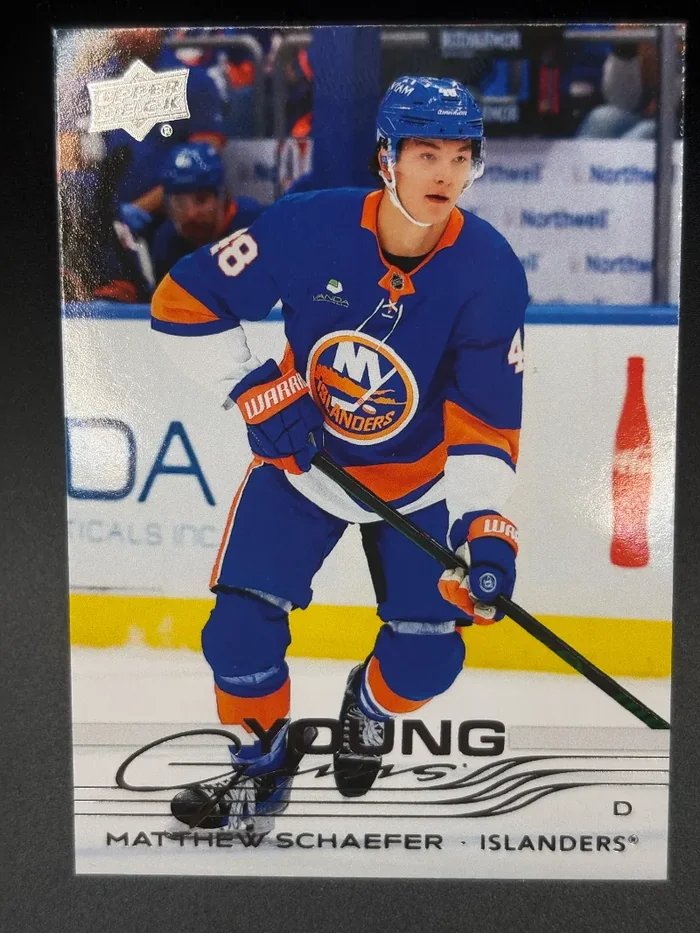
Young Guns is where most hockey grading decisions actually happen, so it’s worth understanding what separates the three outcomes.
Raw copies of most Young Guns sell for a fraction of a graded 9 — the slab and the certification number are doing real work in the buyer’s mind, even before condition enters the conversation. A PSA 9, though, often sells close enough to raw that the grading fee eats the difference; this is the trap the 3x Rule exists to catch. A PSA 10 is where the real premium shows up, sometimes several times the 9’s price on a genuinely in-demand rookie.
Print quality varies by year and by print run more than collectors expect — some Young Guns years have had real, documented centering problems on specific players or subsets, not just bad luck on individual copies. Population reports matter here too: a Young Guns with a large existing PSA 10 population needs a bigger price gap to justify the fee than one where 10s are still genuinely scarce.
Future Watch Autos: Which Years Are Worth It?
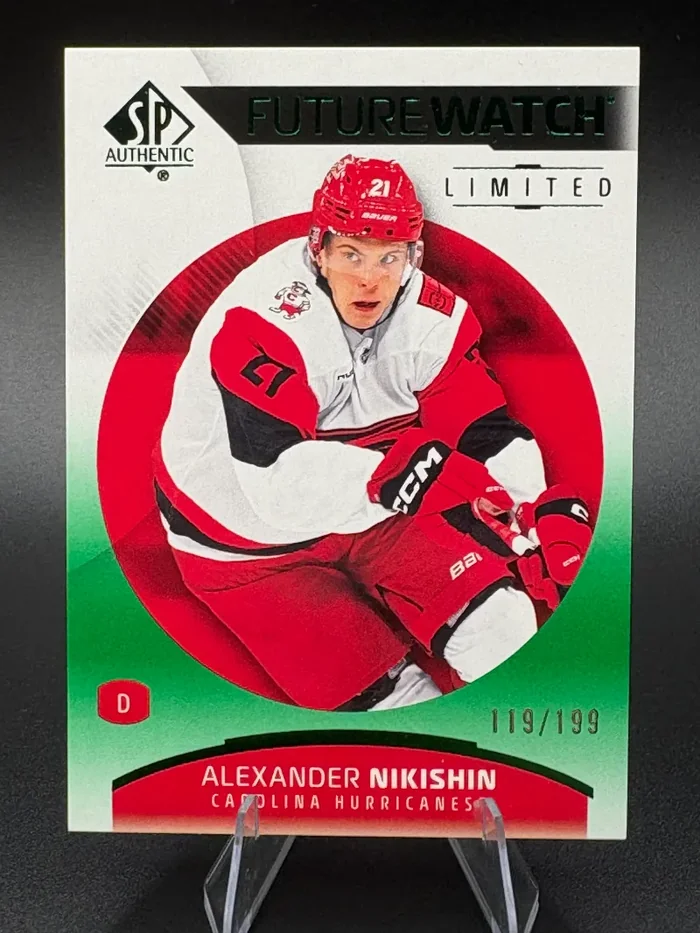
Future Watch autographs — Upper Deck’s rookie autograph insert, most commonly seen in SP Authentic — are a different decision than a base Young Guns entirely, because the autograph itself is doing most of the value work, not just the condition grade.
The sticker-vs-hard-signed distinction matters more here than almost anywhere else in the hobby. A hard-signed (on-card) autograph is generally worth more collector trust and resale premium than a sticker auto of the same player and year, all else equal — worth checking which one you actually have before assuming a Future Watch auto grades and sells the same as another year’s. Auto quality itself varies card to card in a way base rookies don’t — a shaky or light signature can matter to a buyer even inside the same numbered parallel.
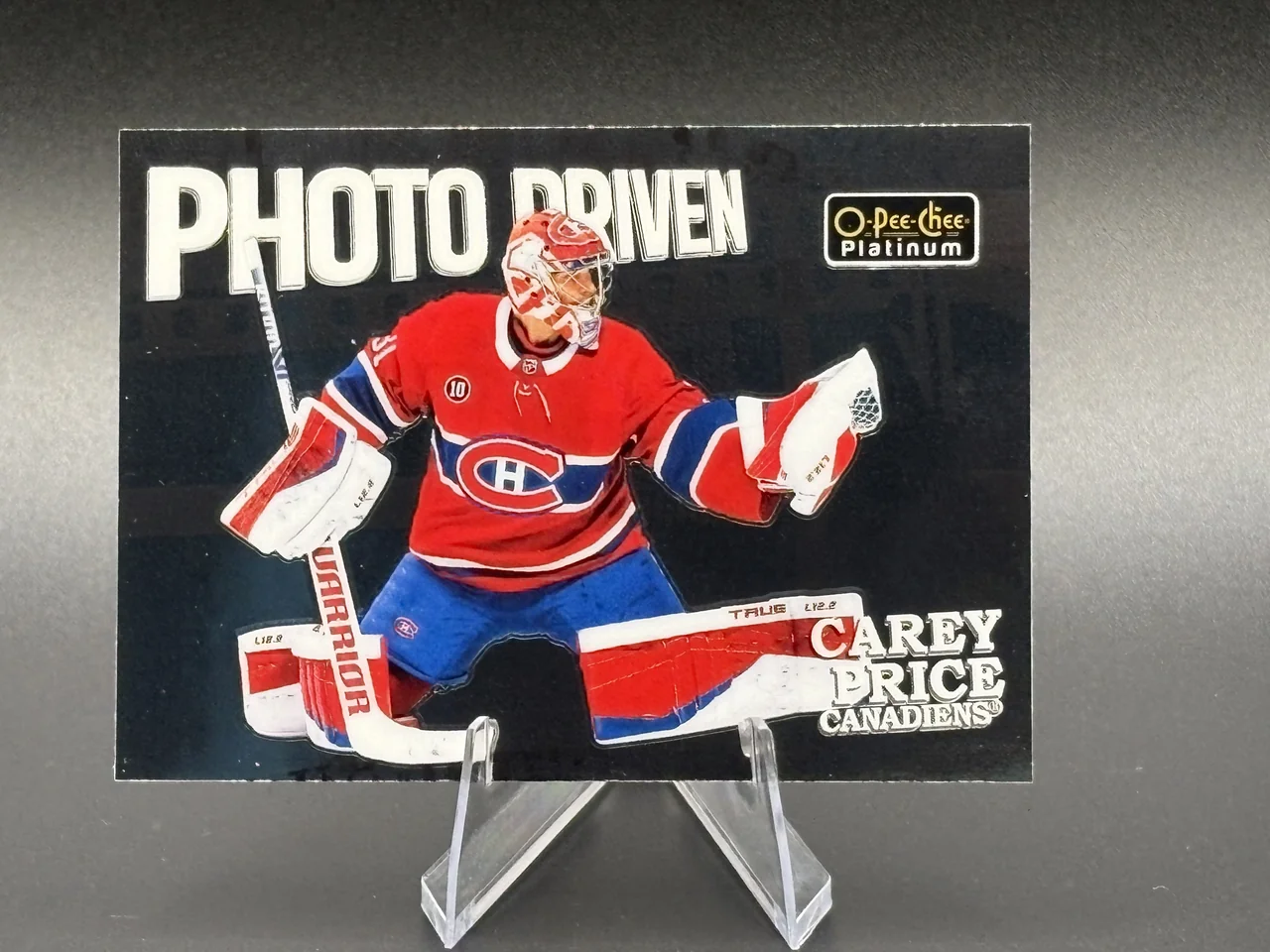
OPC Platinum: The Chrome Problem
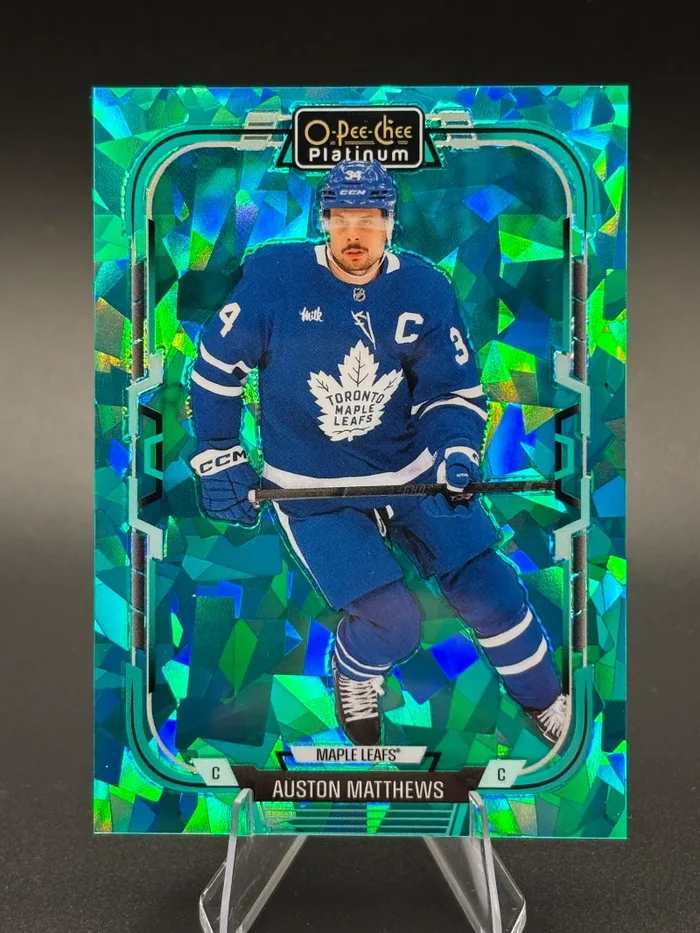
Cracked Ice Parallel
O-Pee-Chee Platinum, from our collection — the reflective surface that makes chrome-style defects hardest to spot straight-on.
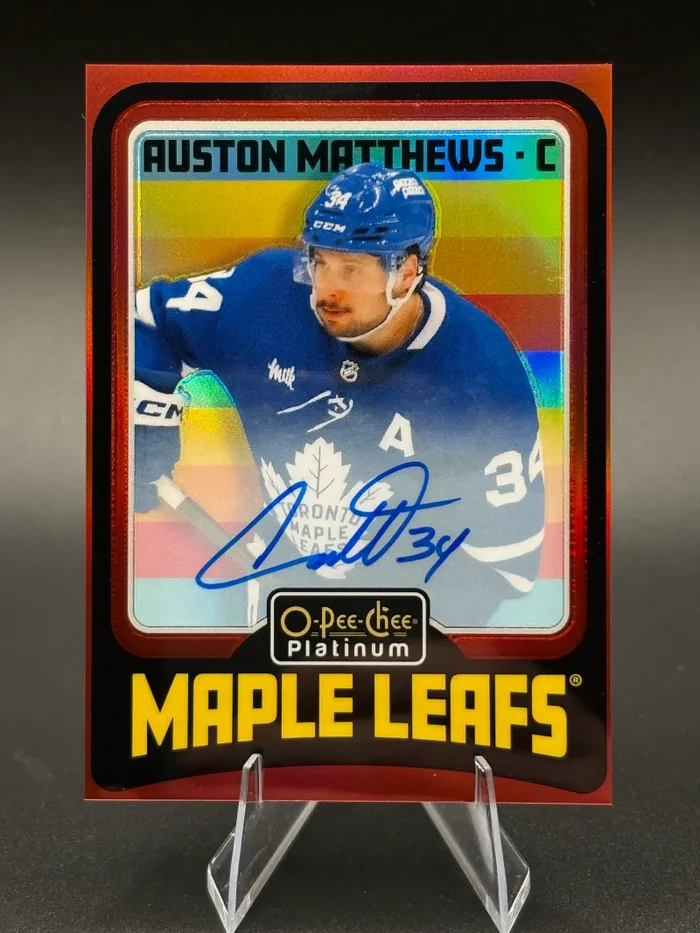
Hard-Signed Auto
O-Pee-Chee Platinum autograph, from our collection — a genuine on-card signature, the standard Future Watch autos are compared against.
O-Pee-Chee Platinum shares the same defect profile as every other chrome-finish product in the hobby, hockey included: surface scratches and print lines that are invisible under flat light and immediately obvious under raking light. If you’re checking an OPC Platinum card, don’t trust a straight-on look — tilt it under a single light source the way you would a Topps Chrome or Panini Prizm card.
The Cup: High Cost, High Risk
Upper Deck’s The Cup is thick-stock, ultra-premium, and built around patch windows and low print runs — which means the same defect pattern as other premium memorabilia products across the hobby: soft corners and rough edges are common straight out of the pack on thick stock, simply because thick card stock handles differently in a printing and cutting line than a standard card.
That combination — high per-card value, common corner and edge softness, and a real grading fee — makes The Cup one of the highest-risk categories to submit without checking first. A missed corner issue on a $40+ submission fee is a more expensive mistake than the same miss on a $20 Young Guns.
Vintage: O-Pee-Chee Rules Are Different
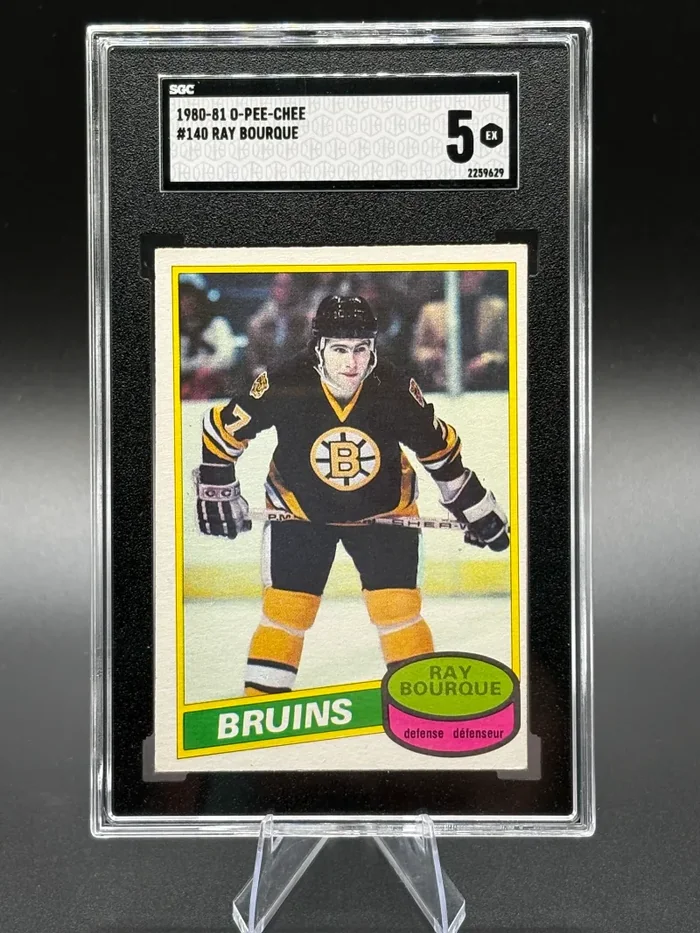
Pre-1990 O-Pee-Chee cards were notoriously rough-cut at the factory, so soft corners on an OPC card don’t always mean handling damage — sometimes that’s just how it left the printer. Wax stains from the original pack wrapper show up on vintage OPC more than modern collectors expect, and print registration — where the color layers don’t align perfectly — is a real, common vintage-era flaw that’s different from a modern print line.
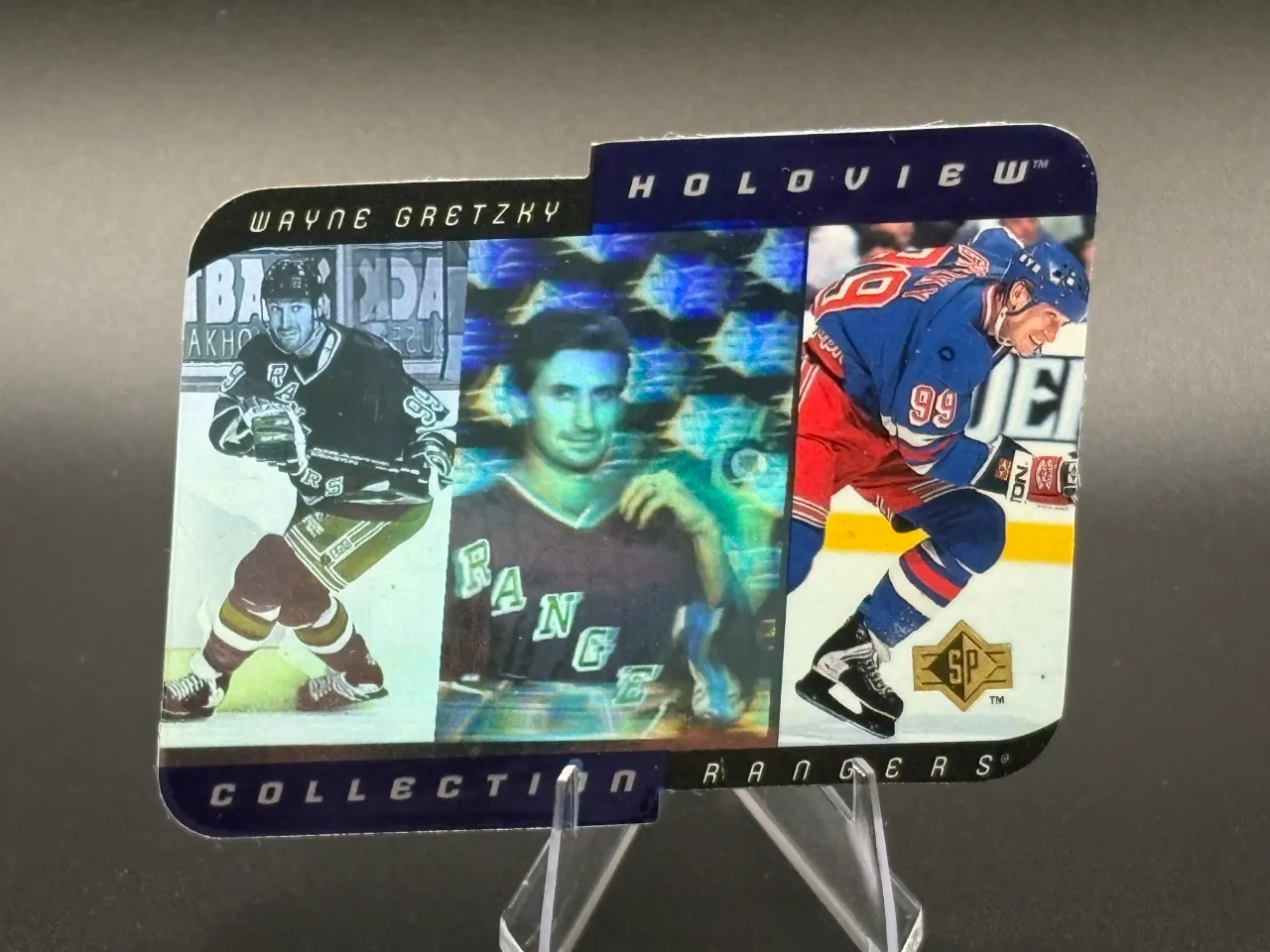
A grader (and a serious buyer) knows the difference between factory-original quirks and actual wear. You should too before you submit — a vintage Gretzky or Bure OPC with rough factory corners isn’t automatically a bad grading candidate the way a modern card with the same corners would be.
Common Hockey Grading Mistakes
A few patterns show up often enough to name directly:
Sending every Young Guns from a box instead of checking each one first — pack-fresh doesn’t mean PSA 10, and a whole box can share the same centering issue if it came from the same print run. Ignoring foil scratching on inserts and parallels because it’s hard to see without raking light. Missing edge chipping on black-bordered parallels specifically, where white edge damage is genuinely easy to overlook at a glance. And grading a low-demand veteran card just because the condition looks perfect — a flawless PSA 10 of a player nobody’s chasing still sells like a flawless PSA 10 of a player nobody’s chasing.
Or skip the guesswork on any of this — upload your card to CrackorKeep and get a read across centering, corners, edges, and surface in about 30 seconds, free.
From My Collection: I’m sending four Young Guns from my own collection to CGC this week — Beckett Sennecke, Matthew Schaefer, Macklin Celebrini, and Michael Misa. Turnaround is roughly 10 business days, so I’ll update this guide once the grades come back, with CrackorKeep’s estimate next to the official result for each card.
The Bottom Line
Hockey grading economics come down to one format doing most of the work: the Young Guns rookie, where a PSA 9 often isn’t worth the fee but a PSA 10 usually is. Future Watch Autos live and die on the autograph, not just the card. OPC Platinum needs a raking-light check like any chrome product. The Cup carries real corner risk on a high fee. Vintage O-Pee-Chee plays by its own rules entirely. Check the specific product’s real weak spot before you pay, not after the slab comes back short.
Frequently Asked Questions
Which hockey cards are actually worth grading? Young Guns rookies with real star power or a realistic path to a PSA 10, low-numbered parallels and inserts where scarcity changes the math, hard-signed Future Watch autos over sticker autos of comparable players, and genuine vintage Hall of Famers. Common modern base cards and low-demand veterans rarely clear the fee.
What’s the best grading company for hockey cards? PSA holds the strongest resale value for most hockey cards. BGS is the pick if you want subgrades on the slab — a real differentiator for modern Young Guns. SGC has a loyal following for vintage O-Pee-Chee specifically. CGC is the budget and speed option.
Why do Young Guns rookie cards matter so much in hockey? Upper Deck’s Young Guns has been the dominant modern hockey rookie card format for two decades, unlike football or basketball where rookie hype spreads across several competing products. Most hockey grading decisions come down to this one card.
Are vintage O-Pee-Chee hockey cards worth grading? Often, yes — especially Hall of Famers from before 1990. Just know that O-Pee-Chee cards were commonly cut rough at the factory, so a soft corner doesn’t automatically mean handling damage the way it might on a modern card.
Should I grade The Cup or Future Watch hockey cards? The Cup can be worth it, but check corners and edges carefully first — thick card stock commonly shows soft corners straight from the pack, and the grading fee is higher than most tiers. Future Watch autos come down to the autograph itself; a hard-signed auto generally carries more resale trust than a sticker auto of the same player.
Grade Your Card Before You Pay PSA
Upload your card photos and get an instant AI estimate across centering, corners, edges, and surface. No account. No credit card. Just an honest grade.
Check This Raw Card →