Pokémon Card Grading: The Complete Guide
Everything you need to know about grading Pokémon cards in 2026 — cost, process, which companies to use, and how to tell if your card is even worth submitting.
Every Pokémon collector eventually asks the same question: is this card worth grading, or should it stay raw? It depends on more than how clean the card looks. Grading costs money, takes weeks, and only pays off if the card comes back with the grade you were hoping for — and most don’t. Here’s how to work through that decision before you spend a dollar, plus what to expect once you do submit.
Should You Even Grade This Card?
Only if it’s worth meaningfully more graded than raw. A grading fee plus shipping and insurance can run $30-150 depending on the company and tier, so the card needs real room above that before submitting makes sense.
Vintage WOTC-era holos, first editions, and modern chase pulls with genuine secondary-market demand are usually the safe candidates. A $10 common from last month’s set almost never is — once you factor in grading fees, shipping, and insurance, the math usually doesn’t work.
Buyers trust a card in a slab more than a raw card someone swears is “mint.” That trust is really what you’re paying for. Run the specific numbers on your own card — current fees, current comps, current turnaround — in our full Pokémon grading cost breakdown .
What Grade Will It Actually Get?
Probably lower than you’re hoping. Most modern submissions don’t come back as PSA 10s even when they looked perfect straight out of the pack. A tiny print defect, a hair of off-center border, or edge whitening you didn’t notice under normal light is enough to knock a card down to a 9 — and that’s the difference that decides whether the submission was worth it.
The hard part is that most collectors are pretty good at spotting obvious damage. It’s the tiny print defects and centering issues that catch people off guard. Most cards that look pack-fresh still don’t come back a 10 — a soft corner, a hair of off-center border, or edge whitening is often enough to knock a card down a grade or two. Budget for a 9, and treat a 10 as upside. Four categories shape the grade, and modern Pokémon has its own trouble spots in each one:
Centering — holo and reverse holo prints are notorious for off-center borders. Sets like Silver Tempest have had well-documented centering headaches. PSA’s published centering tolerance for a 10 is approximately 55/45 on the front. Miss that and you’re generally looking at a 9 or lower.
Corners — soft or fuzzy corners from pack handling show up straight out of the box, before the card’s even touched a sleeve.
Edges — whitening is the most common surprise defect on modern Pokémon, and black-bordered cards make it almost impossible to miss once you know to look.
Surface — holo patterns are good at hiding scratches head-on. Tilt the card under a light and look again before you trust what you saw the first time.
Which Company Should You Use?
PSA carries the strongest resale premium of any grading company, and it’s the name most buyers recognize on sight — especially for anything vintage or high-demand. If resale value is the point, PSA is usually worth the extra cost and wait.
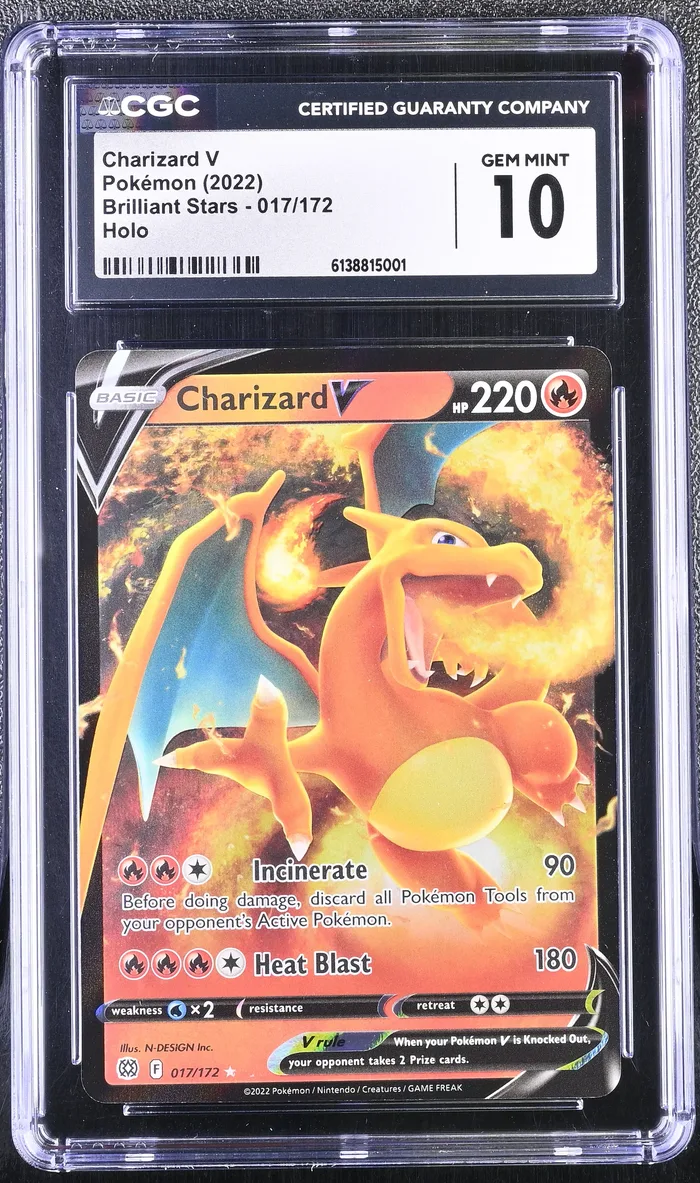
CGC offers Bulk grading at $17 per card with a 25-card minimum and Economy grading at $20 per card. Direct submission is available with a free account, while paid memberships provide discounts. Check CGC’s current services and fees page before submitting because turnaround estimates move quickly.
BGS is the one to consider for premium patch or autograph cards, thanks to its four-subgrade Black Label format.
SGC has a loyal following for vintage.
No matter which company you pick, the submission process is largely the same.
How Do You Actually Submit It?
Create an account, list the card with a declared value, choose a service tier, pack it securely, and ship it insured. That’s the overall process — but the details that trip people up (packing, tier selection, what happens if your declared value is off) matter more than the outline suggests. Our step-by-step guide to getting Pokémon cards graded walks through each of those, including the packing mistakes that cause the most damage claims.
If you’re on the fence, a second opinion before spending the grading fee can save real money. CrackorKeep estimates centering, corners, edges, and surface from a photo, so you have a better sense of whether a submission is likely to justify itself before you pay anyone.
The Bottom Line
Grade the card if it clears real profit above the fee and the shipping risk — not because it looked flawless when you pulled it. Check it first, know roughly what grade to expect, then pick the company that matches what you actually want out of the slab: resale value, speed, or subgrade detail.
Frequently Asked Questions
What does it cost to grade a Pokémon card? Depends on the company and tier. PSA’s Standard tier becomes the entry point on September 14, 2026 while its Value tiers remain paused, and CGC offers lower-cost Bulk and Economy tiers. See our full cost breakdown and check each grader’s live service page before submitting.
How long does Pokémon card grading take? Turnaround estimates change with submission volume. Check the grading company’s current service page before submitting rather than relying on a fixed estimate printed here.
Which is better for Pokémon cards, PSA or CGC? If you’re chasing resale value on something vintage or high-demand, PSA. If the card is going into your own collection and lower entry-tier pricing matters more, compare CGC’s current fees and turnaround before deciding.
Can I estimate my Pokémon card’s grade before submitting? Yes — that’s what CrackorKeep is for. It checks centering, corners, edges, and surface from a photo, the same four categories a professional grader checks, so you’re not submitting blind.
What’s the actual step-by-step process to submit a card? Create an account with your chosen grading company, declare a value, pick a service tier, pack the card securely, and ship it insured. Our step-by-step submission guide covers each step in detail, including the packing mistakes that cause the most damage claims.
Grade Your Card Before You Pay PSA
Upload your card photos and get an instant AI estimate across centering, corners, edges, and surface. No account. No credit card. Just an honest grade.
Check This Raw Card →